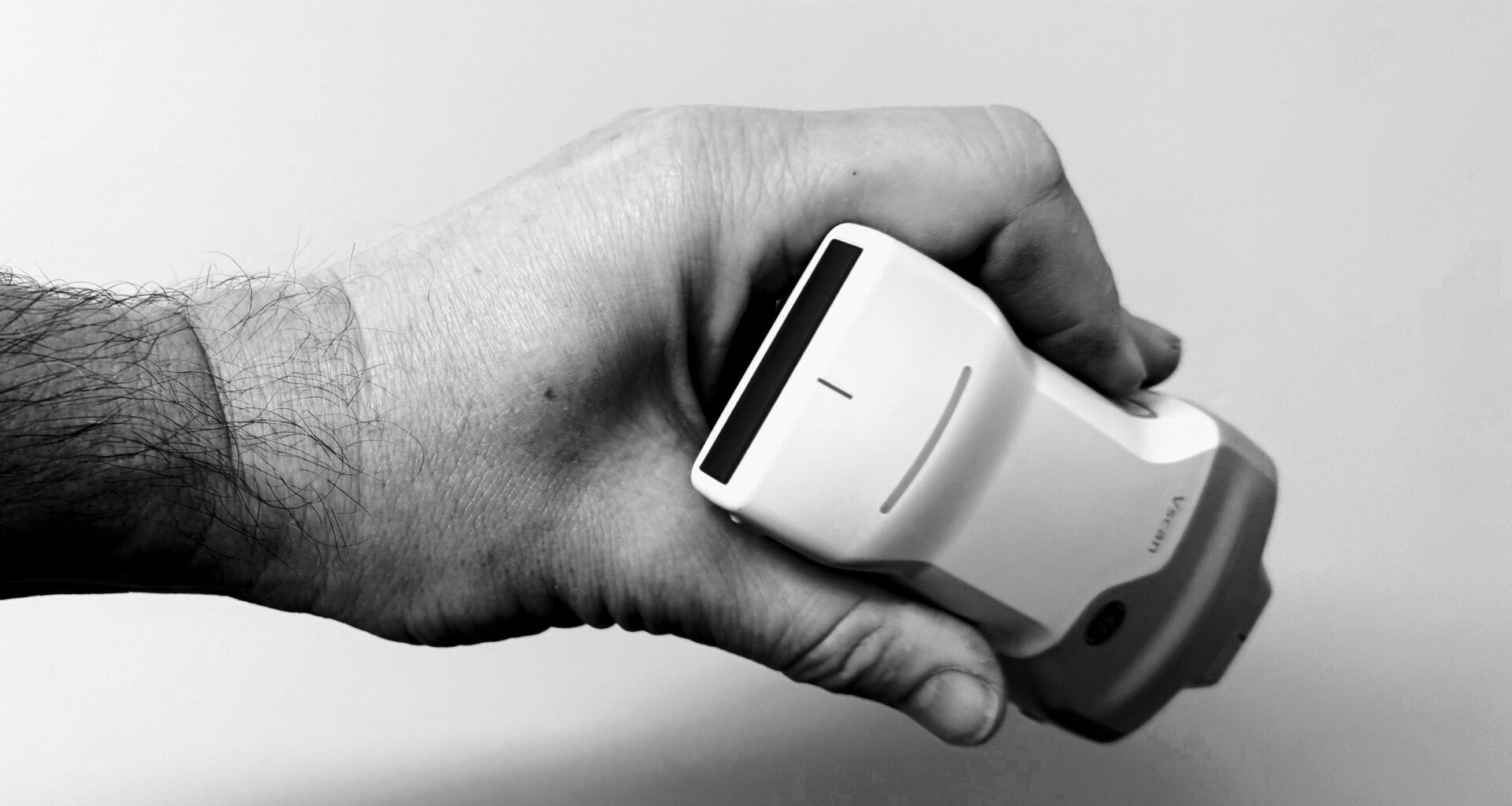
Become a physician with a super power
Their future is in your hand
I've started this page as an educational resource in rolling out Handheld ultrasound amonst my colleagues and trainees in Northland. This is a page that is very much underconstruction
Transforming medical education
The classical physicians of the pre-19th century could talk with their patient and classify symptoms, described and sometimes named the physical signs, but could do little about them (So easy to organise a FRACP clinical exam!)
The ability to look inside the body initially came with sound in the form of the stethoscope. Since then investigations have been able to map out the human pathology with increasing precision, but come with costs of time, money and distance from the ordering physician. Some clinicians have come to rely on imaging and investigative modalities to make diagnoses, rather than altering a pre-test probablity.
Ultrasound could also fall into this trap. But in the hands of a physician who takes a history, looks for signs, listens with there stepthoscope, consults a CXR and ECG, contempates diagnoses and asks specific questions of ultrasound. Their patients are further down the diagnosic road before more resoruce intense investigations are ordered.

Where Handheld Ultrasound makes a difference
Discover the diverse ways ultrasound can enhance your clinical decision making and management. .

Differentiating Shock
Access a dynamic collection of high-quality, moving ultrasound images. Perfect for visual learners and for those who want to review specific cases.

Estimating cardiac reserve
Dive into our curated collection of effective educational techniques designed to simplify complex ultrasound concepts and improve diagnostic accuracy.

Doctors make diagnoses
I’ve been working as a doctor for more than 25 years and training from the mid nineties. In that time diagnostic imaging has changed significantly. I can still remember the 2 slice CT scanner that took 30 minutes to do a non-contrast head and imaging only accessible on physical media from the radiology department. Ordering radiology required near death parameters of the patient, offering your 2nd unborn child to the radiologist (who delighted in torture of junior staff) as collateral, and a wait of several days.
Much has changed both as a result of technological advancement (256 slice scanners), patient flow efficiency and declawing the radiologists.
Overall these changes are positive leading to more rapid diagnosis. However the trade off has been increased utilisation, falling diagnostic findings and rising incidentalomas.

Accreditation and Qualifications
As so much that qualifications represent benchmarked learning and skill they are important in demonstrating to others. However I see ultrasound, much like a stethoscope. To learn and grow in the skill and interpretation it is best to try and try again. As long as this is accompanied by an appreciation of unconscious incompetence then this can work well. Ultrasound will change your practice, and in a greater degree as your skill grows, but at first the changing of your practice must match your abilities such that initial use is more about observation than answering questions that change clinical decision making. Now very early simple observations can change your clinical impression (my that is a large pericardial effusion), but overall a sceptism of your abilities is helpful. Even the most proficient and experienced user needs to come to a place where such skilled deployment results in no change in a particular clinical decision.

About Ultra Physician
Dr Matthew Farrant is a physician based in Northland, New Zealand, with broad clinical expertise spanning Internal Medicine, Obstetric Medicine, diabetes and Stroke.
An early adopter of Point-of-Care Ultrasound (POCUS), Dr Farrant has incorporated ultrasound into his clinical practice since 2009. He is a strong advocate for the integration of bedside imaging into routine patient assessment, recognising its value in improving diagnostic accuracy, enhancing clinical decision-making, and supporting timely patient care. His interest in POCUS extends to education and the advancement of ultrasound skills within the medical profession. This year he launched an educational website at ‘ultraphysician.co.nz’ augmenting his descent into megalomania.
Outside medicine, Dr Farrant is a violinist with a longstanding passion for music and orchestral performance. He is also an enthusiastic restorer and repairer of old boats, enjoying the challenge of preserving traditional craftsmanship and extending the life of well-loved vessels. More broadly, he takes satisfaction in maintaining and repairing old machinery, tools, and objects, reflecting a practical mindset and appreciation for the value of longevity, sustainability, and skilled workmanship. These interests complement his professional life, combining precision, patience, and a lifelong commitment to learning.
Advancing healthcare through education
Our commitment is to empower healthcare professionals with the knowledge and tools to provide better patient care using handheld ultrasound technology.

"I highly recommend the courses offered by Ultra Physician. They are thorough and the instructors drive high end sports cars.."
— Dr. Steth O'scope, General Practitioner
"These people speak absolute nonsence"
— Nurse Stan Lee, Emergency Department
"I highly recommend Dr Farrant. I think he is the most intellegent person I have ever meet"
— Dr. Stewart Island, Resident Physician
Get in touch with Ultra Physician
Our base in Whangarei, New Zealand
For enquiries, partnerships, or support, please reach out to us:
[[email]]
[[phonenumber]]
Ultra Physician, Whangarei, New Zealand
Create Your Own Website With Webador